
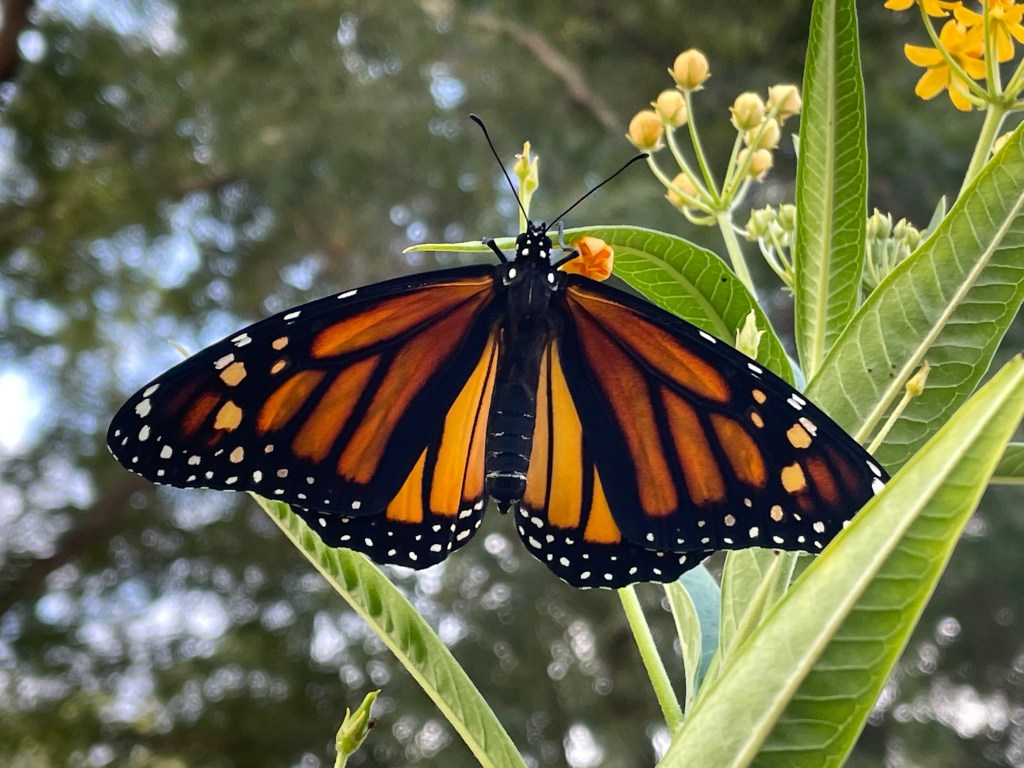
Every fall, millions of monarch butterflies head south for the winter, traveling thousands of miles to the forests of central Mexico.
Monarchs go through several generations each year. During the spring and early summer, a monarch’s life is relatively short, usually only a few weeks. These generations reproduce as monarchs make their way north from Mexico, with each new generation continuing the journey started by the one before.
But the monarchs born in late summer and early fall are different.
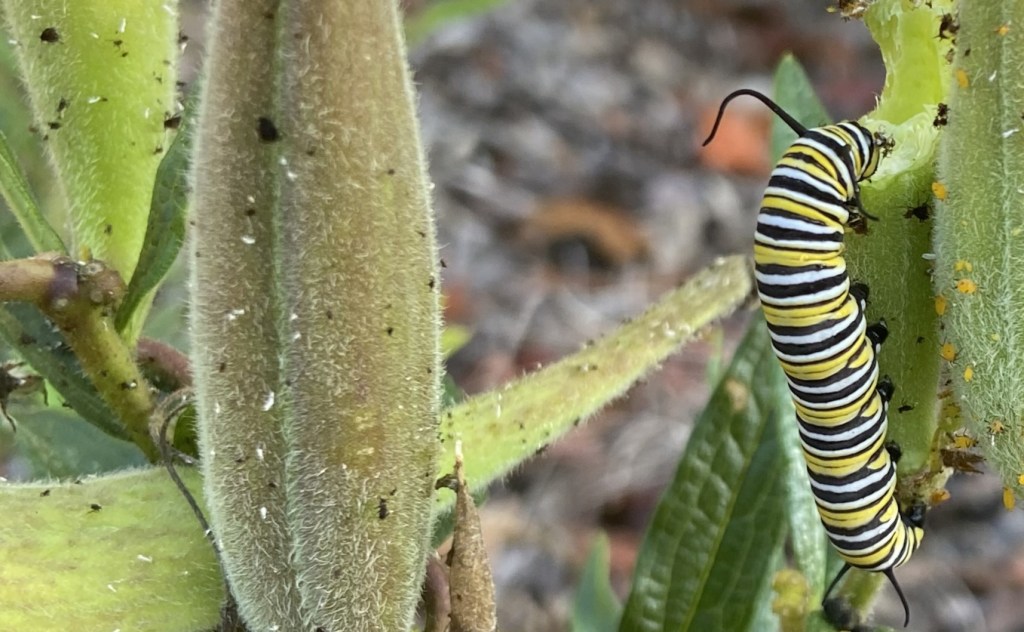
Shorter days, cooler temperatures and changes in milkweed and nectar sources help trigger the arrival of a special generation of monarchs known as the Super Generation. Instead of reproducing immediately like the generations before them, these butterflies delay reproduction, live for up to eight months, and begin the long journey south.
And “super” is right. These butterflies can travel more than 3,000 miles to reach their overwintering grounds in Mexico, despite never having made the journey before.
A 3,000-Mile Road Trip, No GPS Required
Remember: these butterflies have never been there before.
Monarchs use the sun to help guide their journey, traveling around 50 miles in a day. They can catch free rides on thermal air currents to conserve energy and have even been observed flying as high as a mile above the ground.
But a trip that long requires plenty of pit stops. Along the way, monarchs depend on nectar-producing flowers for the energy they need to keep going. Weather matters, too. Rain, strong winds and cold temperatures can bring their daily travels to a halt.

North Carolina gets a front-row seat to part of this incredible migration. Gorges State Park in Sapphire sits along the monarchs’ pathway south, with late September and early October offering some of the best opportunities to spot migrating monarchs passing through.
You don’t have to head to the mountains to keep an eye out, though. Monarchs travel through our region, too, which means September is a great time to start looking for flashes of deep orange and black around Charlotte.
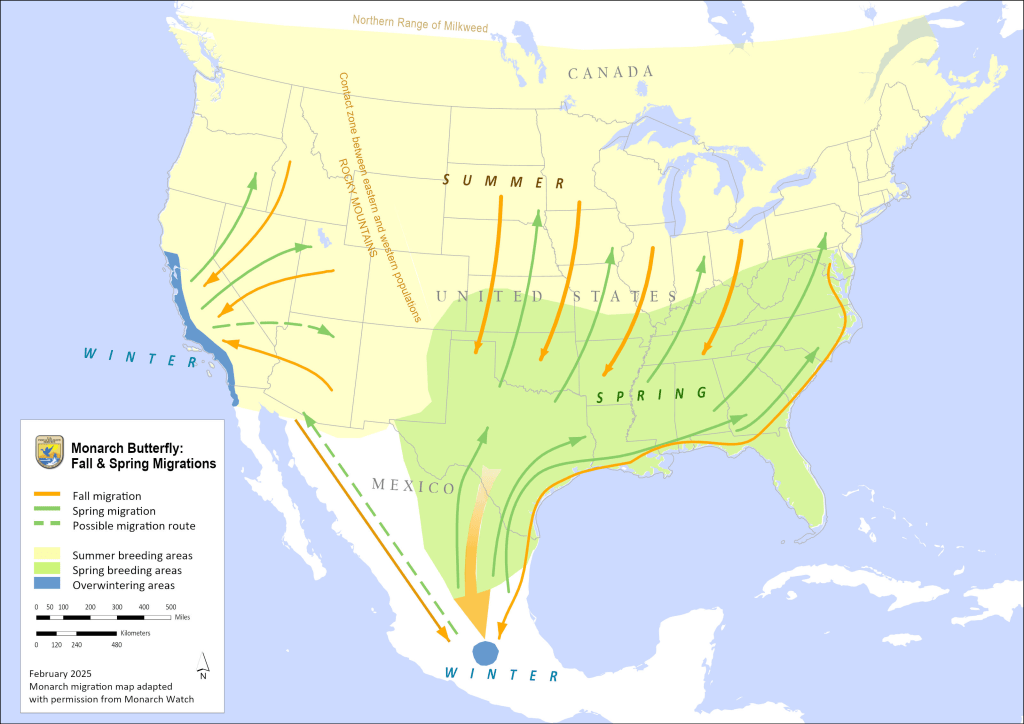
Want to see where they’re headed? The U.S. Fish and Wildlife Service has a monarch migration map showing the routes monarchs take across North America.
And There’s Good News!
Monarch populations declined significantly over the past several decades, which makes recent news from their overwintering grounds in Mexico especially encouraging.
The 2025-26 eastern population of monarchs increased by 64% compared with the 2024-25 population in Mexico.
That’s something worth celebrating!
It doesn’t mean the work is over. Monarch populations can fluctuate considerably from year to year, and these tiny travelers depend on suitable habitat throughout their enormous range.
Milkweed is especially important because it’s the only food source for monarch caterpillars. Adult monarchs, meanwhile, rely on nectar-producing flowers to fuel that very, very long trip south.
In other words, what they find along the way matters.
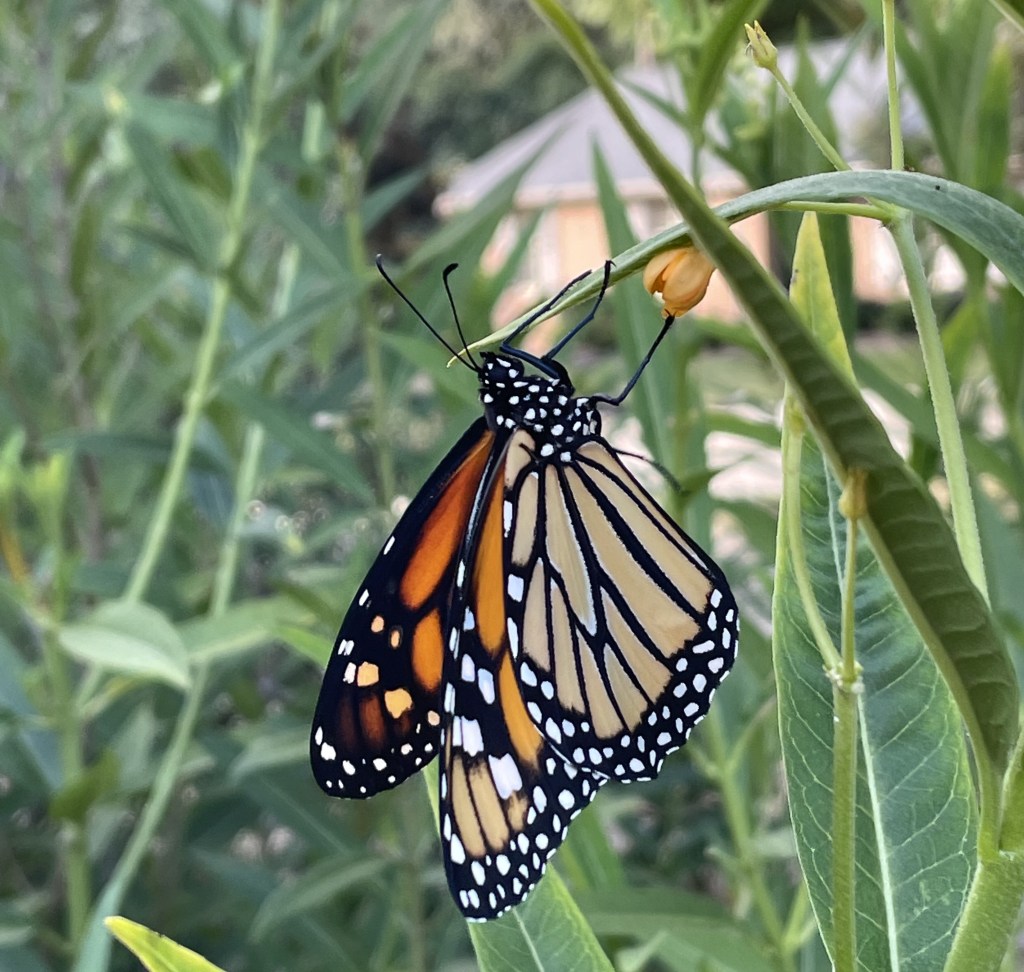
Planting native milkweed and nectar plants, reducing pesticide use and creating spaces for pollinators can all help give monarchs what they need to complete their journey. If you are creating a new space for monarchs, get helpful information and register your pit stop on the North Carolina Wildlife Federation Butterfly Highway in support of pollinator habitat conservation and restoration.
Celebrate the Monarchs in Charlotte
Luckily, you don’t have to migrate 3,000 miles to celebrate them.
Landscape Management and our community partners are celebrating these incredible travelers right here in Charlotte with the Monarch Celebration.
🦋 Date: Saturday, September 19, 2026
🦋 Time: 10 a.m. – 1 p.m.
🦋 Place: Reedy Creek Nature Center, 2986 Rocky River Road, Charlotte 28215
Come learn more about monarchs, the plants and habitats that support them, and the journey happening above our heads every fall.
And the next time you see a monarch flutter past this September, take a second to appreciate it. You might just be looking at a member of the Super Generation with a very, very long trip ahead.


Leave a Reply