
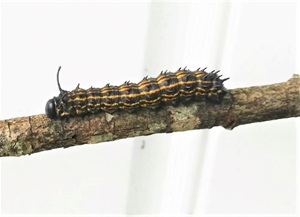
Chances are the caterpillars you see in August and September are orange-striped oakworms (Anisota senatoria). And the question on everyone’s mind is: will they harm your oaks?
As the late summer sun begins to wane, and the early fall breeze whispers through Charlotte yards, a fascinating visitor graces the scene – the insatiable orange-striped oakworm. With a hankering for oak leaves, these diligent feeders also will eat maple, birch, and hickory leaves. As they make their way through the foliage, they leave their mark, often stripping the leaves or affecting a branch or two during their brief residence. Let’s dive in to what else you should know about this caterpillar.
How to Spot Them
These two-inch-long black caterpillars with orange stripes love to hang out on sidewalks or in the grass under your trees. You may also notice their frass pellets (feces) on your deck, patio or sidewalk. By fall, these caterpillars have finished feeding and are crawling down tree trunks to find suitable places in the ground to pupate. By that time, any damage to the tree is already done.
Will They Kill My Trees?
The good news is that in most cases, the orange-striped oakworm won’t kill a healthy tree. “They are typically more of a nuisance than a true danger since the damage is limited to small areas of trees,” said Charlotte City Arborist Laurie Reid. “Charlotte residents can take some comfort in that. But if you’re still concerned about the health of your trees, contact an International Society of Arboriculture (ISA) certified arborist for assistance.”


 Canopy Conversations
Leave a comment