

Did you know there are over 1,300 types of insects found in North Carolina? Most go about their day without being noticed. One of those insects is the fall cankerworm. While in moth form, it is almost invisible, but the caterpillars gain a lot of attention in the spring.
What is the fall cankerworm?
The fall cankerworm is an insect native to North America. It is typically found from Georgia to Nova Scotia and west to Texas. It has a four-stage life cycle: egg, pupa, larva (caterpillar) and adult (moth). They do not bite or sting, but many people may be intimidated by the overwhelming numbers of caterpillars that can be seen at once. Cankerworm caterpillars are usually found during the third week in March. The winged male and wingless female moths emerge in the winter when the soil reaches a certain temperature.
How does the fall cankerworm affect trees?
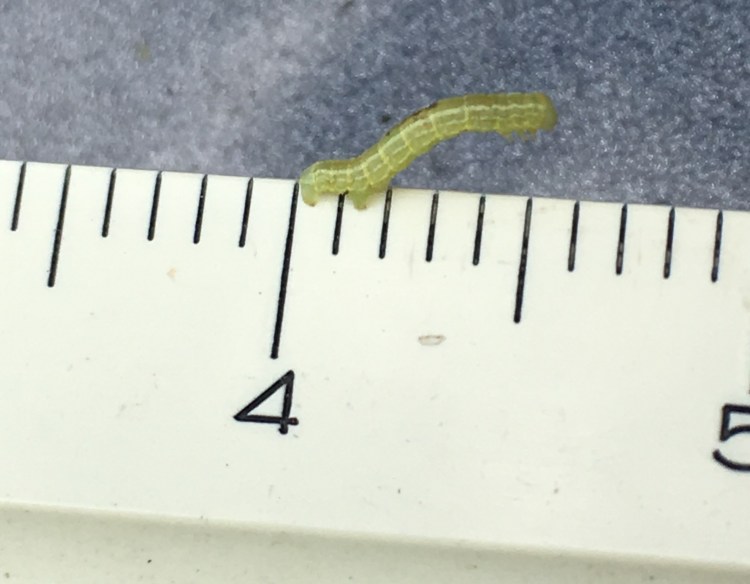
After mating in December, the female moths crawl up trees to lay their eggs on twigs and small branches. As the trees leaf out in the spring, the eggs hatch, leaving small green caterpillars to feed on the leaves for the next four-to-six weeks. They will feed on most tree species except for Pines and Magnolias, but they prefer Willow Oaks. Cankerworm feeding can cause complete defoliation (removal of leaves) of a tree, but a healthy tree can survive one to two seasons of complete defoliation.
Issues with Defoliation
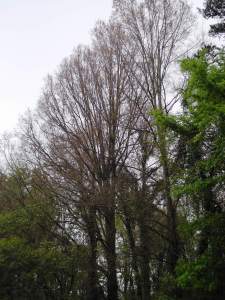
As previously mentioned, the caterpillars feed on newly emerging leaves. However, with large numbers of cankerworms, this feeding causes defoliation of entire trees. Moreover, since the defoliation occurs in the spring, the tree then has to use its stored resources to produce a second set of new leaves for the year (the leaves make food for the trees). And, the use of this stored energy can add to or worsen any existing tree health issues. Repeated annual defoliation of large, old trees can lead to tree decline in combination with other issues (other insects affecting the tree, root issues, diseases, drought stress, etc.).
Control Methods: Bands
Bands are used to capture the female moths and prevent them from laying eggs in the tree canopy; they will reduce the number of caterpillars feeding on the trees and decrease the changes of defoliation. Details of the bands are below.
- There are two types of bands: 1. traditional sticky bands or 2. bug barriers. Both are effective.
- Traditional:
- Cotton batting or pipe insulation is placed against the tree trunk (if there is a gap in the band, the batting will prevent the moths from crawling between the bark and the band)
- Plastic wrap (which you can find at hardware stores or moving supply stores) is placed on top of the batting
- Sticky material is placed in a 2-inch wide band on the plastic wrap.
- Bug barrier is an all-in-one system:
- Cotton batting is placed against the trunk.
- Sticky material is on back of the plastic sheet.
- Bands are placed after Thanksgiving and after most Willow Oak leaves have fallen (or the leaves will get trapped bands).
- Bands removed by the end of April.
History of Cankerworm in Charlotte
City staff monitors cankerworm bands across the city each winter. Bands have proven effective for essentially eliminating the cankerworm as a city-wide problem!
Below is the data from the cankerworm monitoring:
Total females counted on bands for 165 willow oaks:
- 2015: 115,433 females
- 2016: 38,948 females
- 2017: 32,434 females
- 2018: 4,963 females
- 2019: 184 females
- 2020: 117 females
Suspect two years (2017, 2018) of an early spring frost (in March, several nights below freezing temperature) led to decline in population
- cold could have killed foliage
- led to lack of food for caterpillars
- fewer surviving caterpillars to turn into moths
Tips:
- For areas that experienced cankerworms in the spring, residents should continue to band their trees.
- If you do band your tree, participate in the Great Cankerworm Count by monitoring your trees and reporting cankerworm activity. This will help us know when and where they make their return.
- Keep your tree healthy by watering in times of drought, applying a 2-4 inch deep layer of mulch on the tree roots (but not touching the tree trunk), and only using fertilizer when the results of the soil test recommend (do not apply fertilizer annually, only apply when needed), be careful using herbicides (including weed and feed products) to kill weeds near trees as they may negatively affect your trees/shrubs.
More information about the Cankerworm:
- There is only 1 generation per year (egg, caterpillar, pupa, adult = one generation).
- Adult moths spend the summer, fall, and part of the winter underground in a pupa (the life stage between the caterpillar and adult moth).
- Female moths do not have wings; males have wings and fly to mate with the female moths.
- Adult moths emerge from the ground in the winter, typically after several days of hard ground frost (this can occur in December, January, or early February). Since the female cannot fly, the female will climb up the trunk of the tree, mate, and then lay eggs at the branch tips.
- In the early spring when the trees produce new leaves, the caterpillars hatch from the eggs and eat the leaves. Cankerworm caterpillars will feed on many species of trees, but in the Charlotte area they prefer willow oak trees. They will not feed on pines, magnolias, hollies, and other trees with thick, waxy leaves.
- When disturbed, the caterpillars will drop from the leaves on a silk strand.
- The caterpillars are considered a nuisance due to their behavior of dangling from leaves on to people, cars, or property.
- Caterpillars feed for 4-6 weeks and then leave the tree to make a pupa underground where they will spend the rest of the year.
References
- https://charlottenc.gov/cankerworm
- https://charlottenc.gov/GS/asset/LandscapeManagement/Trees/Pages/CankerwormCount.aspx
- https://academic.oup.com/jipm/article/12/1/23/6287317



Leave a Reply