
(And Why They Deserve a Nap Too)
By December, most of us are deep in cozy season. Sweaters? On. Hot drinks? In hand. The Calendar? Surprisingly, on its last page (seriously, how did this year fly by?) It’s a time for slowing down, getting quiet, and, if we’re lucky, recharging.
The trees are doing the exact same thing.
Winter is how trees rest. While we’re inside making soup and watching movies, Charlotte’s trees are outside getting serious about survival, and they’re really good at it. Just like we prep for colder months, trees have their own built-in strategies for making it through winter.
Deciduous trees hit pause.
When the leaves drop in fall, it’s the start of a strategy. By shedding their leaves, deciduous trees (such as oaks, maples, and sweetgums) conserve energy and reduce moisture loss. It’s kind of like turning off the lights and lowering the thermostat until spring rolls around.
Under the surface, tree roots stay active, slowly soaking up nutrients and storing energy. Even without their leafy crowns, these trees are quietly preparing for spring.
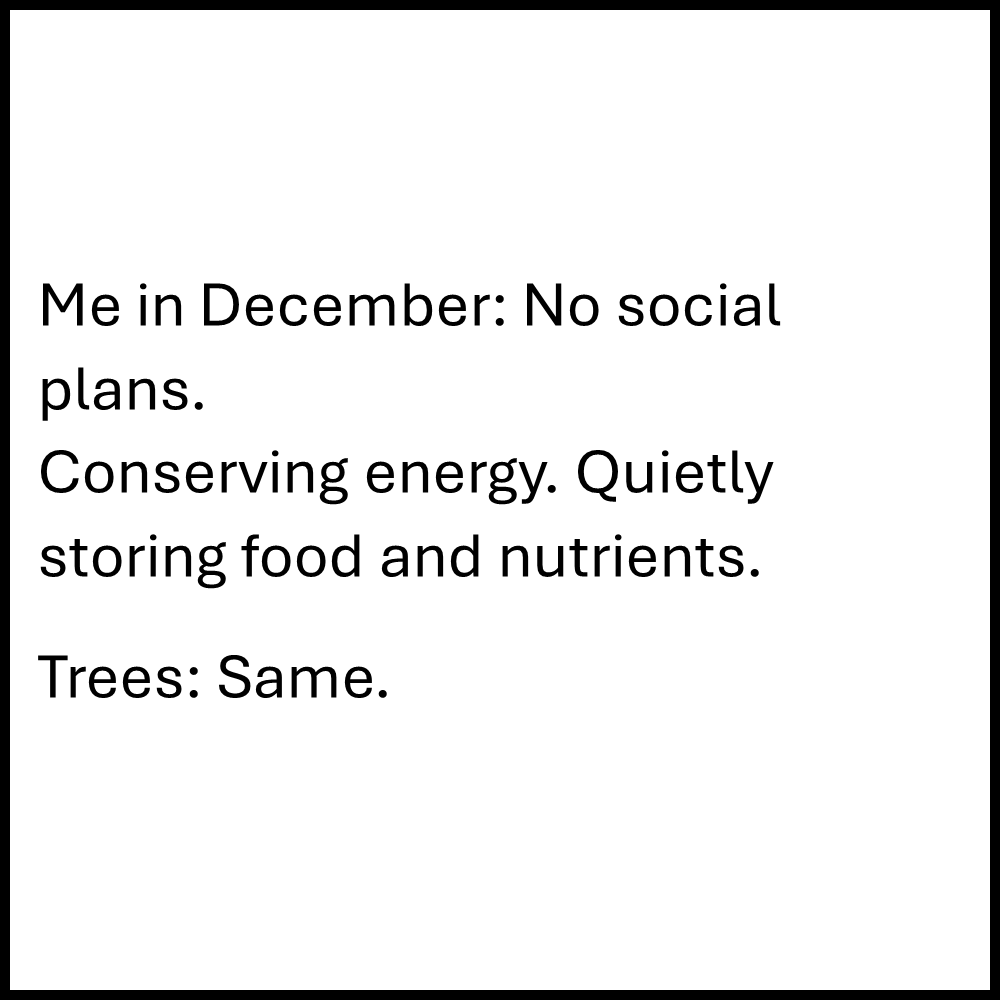
When the leaves drop in fall, it’s the start of a strategy. By shedding their leaves, deciduous trees (such as oaks, maples, and sweetgums) conserve energy and reduce moisture loss. It’s kind of like turning off the lights and lowering the thermostat until spring rolls around.
Under the surface, tree roots stay active, slowly soaking up nutrients and storing energy. Even without their leafy crowns, these trees are quietly preparing for spring.
Evergreens keep the green going.
Not all trees go bare in the winter. Evergreens (like hollies, cedars, and magnolias) have waxy leaves that help them retain moisture and photosynthesize even during the chilly months. They stay vibrant and green while everything else hits snooze.
That’s part of why evergreens have become symbols of life and resilience during the darker, colder season and why they feature so heavily in winter holiday traditions.
Fun fact: Southern Magnolias don’t actually hang onto the same leaves all year! They’re constantly growing new ones and dropping old ones, just little by little. That constant renewal is what keeps them evergreen.
Wildlife still needs the canopy.
Even leafless trees provide essential shelter and food for wildlife during winter. Bark becomes home to overwintering insects. Branches offer safe spots for birds to perch or roost. Fallen leaves create cozy insulation for critters burrowed below.
So even though they might look quiet or “empty,” trees are still doing a lot!
A little gratitude before the year ends.
If your favorite tree could talk, it would probably ask for one thing this winter: a little patience. Let it rest. Let its leaves stay put. Trust the process. Trees know what they’re doing, and after a year of giving us shade, beauty, and cleaner air, they’ve earned their break.
So, from all of us at Landscape Management, thank you for rooting for Charlotte’s canopy all year long. We’re grateful for every tree… and every neighbor who cares about them.
P.S. Winter’s a good time to plan your spring planting! Sign up here for a free tree in 2026.
Request a Street Tree – City of Charlotte
 Canopy Conversations
Leave a comment