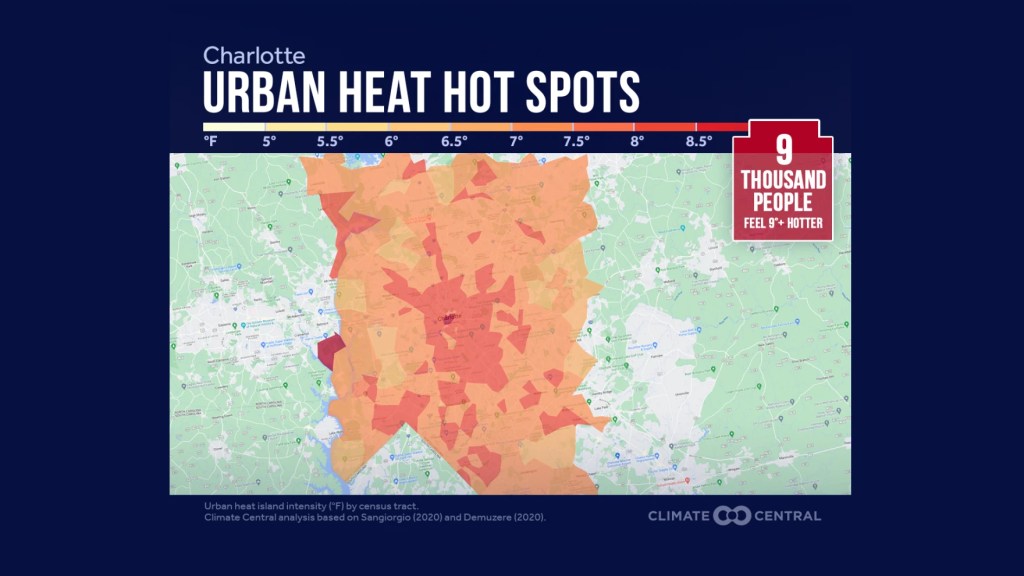
Graphic: Climate Central
In the heart of North Carolina, Charlotte is no stranger to the scorching summer heat. However, it’s not just the summer sun at play here; the city grapples with a pressing issue known as the Urban Heat Island Effect. Charlotte’s temperatures can soar 2 to 10 degrees Fahrenheit higher than its rural surroundings, creating discomfort and health risks for its residents (source). In this blog, we’ll delve into the pivotal role of trees in mitigating this phenomenon and its associated benefits, emphasizing how they can cool our city and enhance our quality of life.
Understanding the Urban Heat Island Effect
The Urban Heat Island Effect is a phenomenon where cities experience significantly higher temperatures than their rural surroundings due to the abundance of heat-absorbing materials and infrastructure, as well as the scarcity of vegetation (source). This effect holds heat longer, making cities uncomfortably hot, especially during summer months.
In Charlotte, this effect is particularly pronounced. For instance, about 9,000 people endure temperatures at least 9 degrees hotter than the area’s baseline summer temperature. Two notable areas suffering the brunt of this effect are Uptown Charlotte, with its dense grid of skyscrapers, and an area south of Belmont in Gaston County, which includes shopping centers, schools, and sprawling residential neighborhoods (source).
The Cooling Power of Trees
On sweltering days, trees become our allies. Shaded surfaces under trees can be a refreshing 20-45 degrees cooler than those in the sun, and air temperatures can drop by 9 degrees in their presence. As climate change intensifies, these cooling benefits will become increasingly crucial in protecting the well-being of Charlotte’s residents (source).
Tree Canopy Coverage in Charlotte
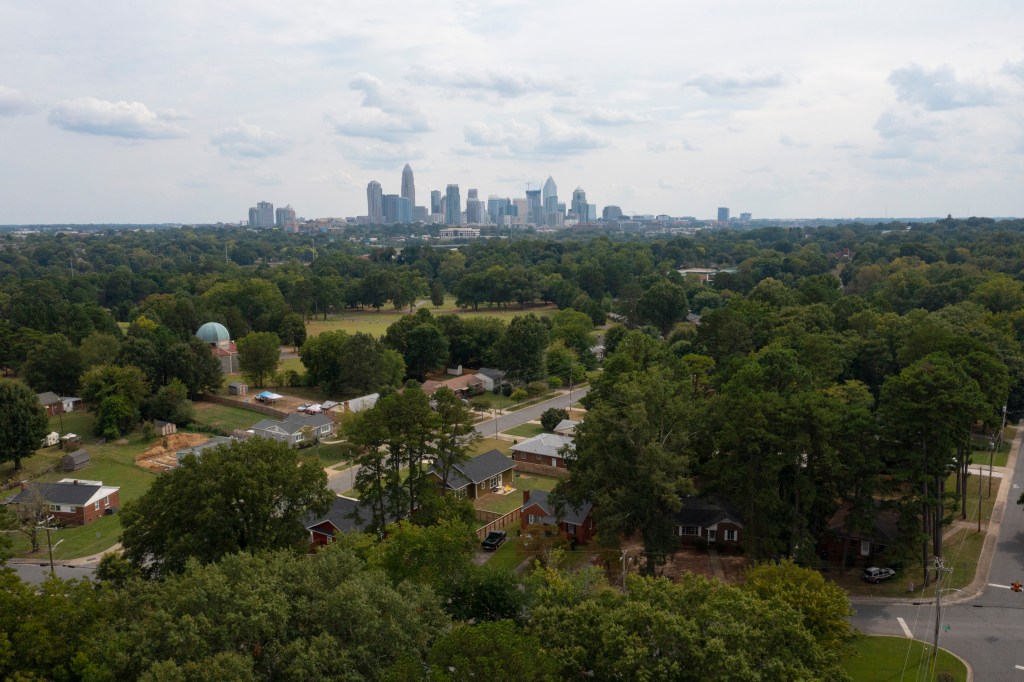
Currently, Charlotte boasts a tree canopy coverage of around 45%, offering essential shade and cooling benefits across the city. However, this canopy has been declining over the years. To tackle the Urban Heat Island Effect, maintaining and expanding this canopy is of paramount importance (source).
The Multifaceted Benefits of Trees
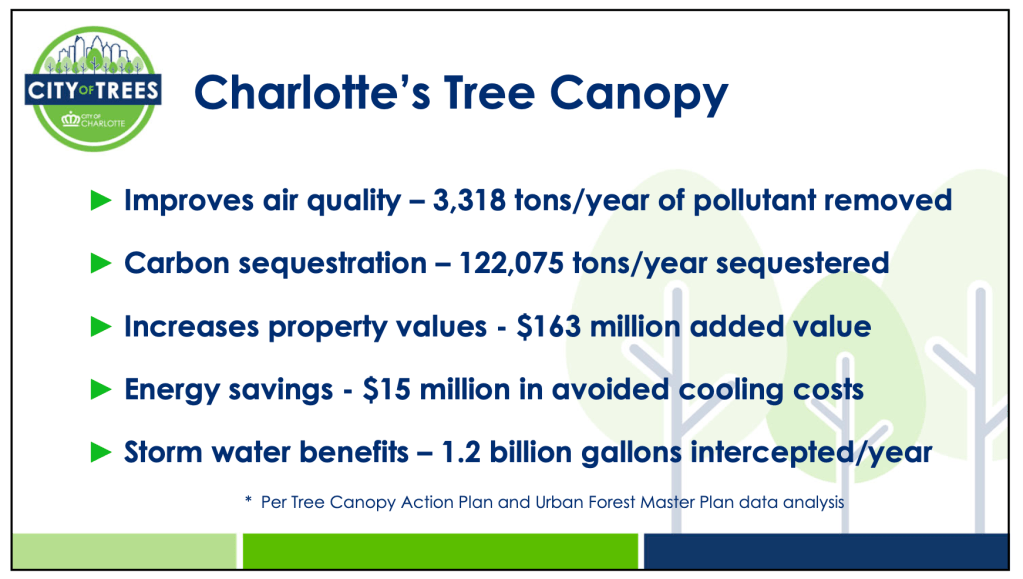
Graphic: City of Charlotte, 2022
Below are just some of the benefits of tree as they relate to cooling and enhancing our community:
- Cooling Effect: Trees can reduce air temperatures by 2 to 9 degrees Fahrenheit in their shaded areas, providing immediate respite from heat.(source)
- Energy Savings: Well-placed tree canopies can lower building cooling costs by up to 20%, leading to substantial energy savings. (source)
- Community Health: Tree-lined streets and green spaces enhance public health by creating inviting physical activity, relaxation, and social interaction spaces. (source)
- Air Quality Improvement: Trees play a crucial role in improving air quality by absorbing pollutants and releasing oxygen, contributing to a healthier urban environment. (source)
- Stormwater Management: Charlotte’s tree canopy helps absorb rainwater, reducing stormwater runoff and the risk of flooding during heavy rainfall. (source)
Challenges in Equitable Access
Graphic: City of Charlotte, 2022
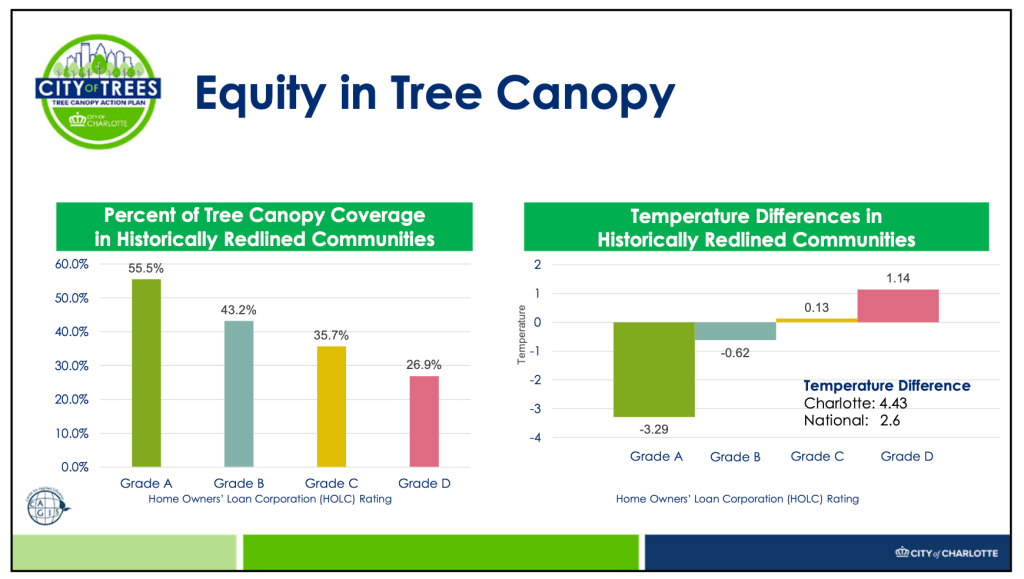
One pressing issue is the inequitable distribution of tree canopy cover. Lower-income neighborhoods often have less tree canopy, leading to heat disparities (source). In Charlotte, this inequity is particularly visible in areas like Southside Homes/Brookhill Village, where the tree cover is drastically lower compared to more affluent neighborhoods (source). Residents in these areas also face difficulties in maintaining trees on private property.
Heat-Related Health Risks
Rising temperatures exacerbate heat-related health problems such as heat stress, dehydration, and respiratory issues, posing a significant threat to vulnerable populations. Addressing these health risks is imperative for Charlotte’s well-being (source).
Action Plans
Both in our organization and across Charlotte, we have identified key focus areas to help combat the urban heat island effect:
1. Climate Adaptation: Increasing the tree canopy is a critical component of Charlotte’s climate adaptation plan, helping the city cope with rising temperatures and changing weather patterns (source).
2. Corridors of Opportunity: The Urban Arboretum Trail, part of the Corridors of Opportunity initiative, is being built in several low-income neighborhoods, enhancing pedestrian and bicycle routes with art, gathering spaces, and, most importantly, trees (source).
3. Collaborative Efforts: Collaboration between local government, community organizations, businesses, and residents is essential for a comprehensive approach to expanding the tree canopy and reducing the Urban Heat Island Effect.
Conclusion
In the face of rising temperatures and the Urban Heat Island Effect, Charlotte’s trees are our natural air conditioners, offering shade, cooling, and numerous other benefits. As we work to expand and protect our tree canopy, it’s crucial to focus on equitable access to these cooling benefits for all residents. By joining hands and taking collective action, we can harness the power of trees to create a more comfortable, healthier, and resilient Charlotte for everyone. To learn more check out: charlottenc.gov/trees.
Resources
WFAE: As the world gets hotter Charlotte is trying to ensure every neighborhood has some shade
American Progress: Making Charlotte a Climate Ready and Just City
Phys.org: Cities need plans for extreme heat, says experts, as heat waves stretch across the globe
One Tree Planted: Three Ways Planting Trees Helps to Reduce the Urban Heat Island Effect
Yahoo: One urban heat island has a plan to bring residents some relief
WFAE: In this summer’s heat, Charlotte and Raleigh are not places to be
EPA: Using Trees and Vegetation to Reduce Heat Islands
WBTV: Tree Equity and Heat Islands
One Tree Planted: How Trees Clean the Air
City of Charlotte, North Carolina Municipal Forest Resource Analysis
NC State: How Parks and Green Spaces Can Improve Your Health


 Canopy Conversations
Leave a comment